


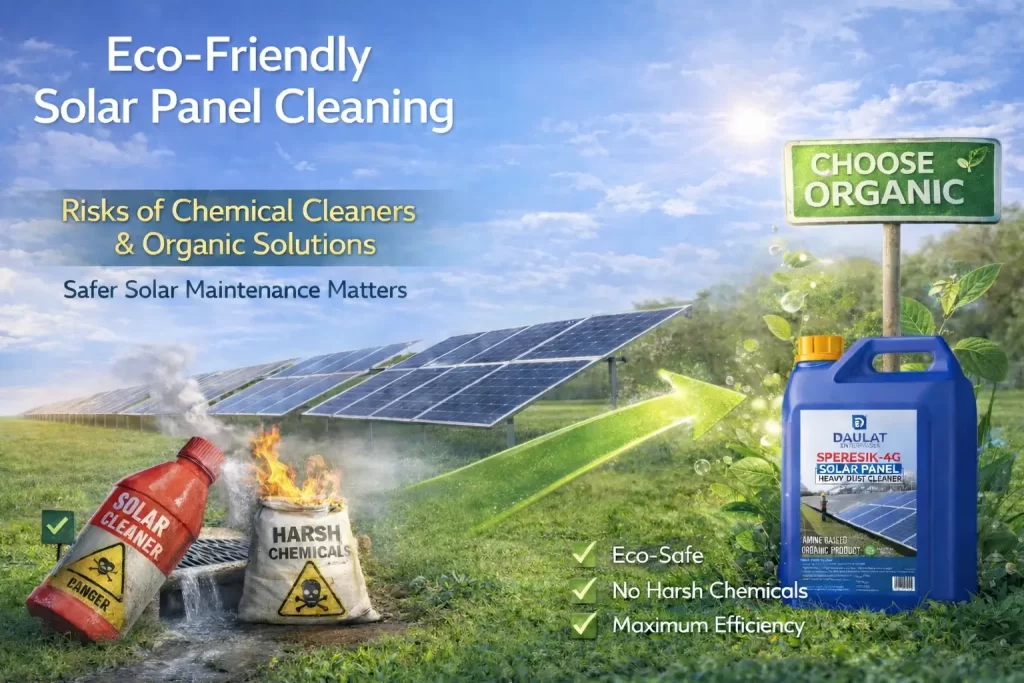
As more people across India turn to solar energy, there’s a problem bubbling up that doesn’t get much attention—how we’re actually cleaning all those solar panels. Everyone agrees that solar power is clean and sustainable. But the way these panels are kept clean? That part doesn’t always live up to the same promise.
Especially in dusty places, solar panels collect dirt fast. Even a thin layer can slash power output by 20 or 30 percent. To fix that, lots of operators use powerful cleaning agents packed with chemicals. The panels look great afterwards, sure. But experts and environmental groups are raising the alarm—those chemicals don’t just vanish after the rinse.
Concerns Over Chemical-Based Cleaning Methods
What happens instead? Most standard cleaning agents are loaded with synthetic stuff that doesn’t break down naturally. After being hosed off the panels, the chemicals seep right into the soil or flow off into drains and nearby water sources.
That adds up. Over time, the land starts to degrade, and water supplies can get contaminated. This hits farming areas especially hard, hurting both crops and the soil that sustains them. It’s not just the environment—people who handle these chemicals a lot could end up with skin problems or even breathing issues.
Despite all this, hardly anyone talks about it. But with more solar arrays popping up everywhere, the problem’s getting too big to ignore.
Need for Sustainable Maintenance Practices
Solar has always been the poster child for green energy. But now, more experts are saying we need to look past just generating clean energy. The way we care for the panels—especially how we wash them—needs to be just as eco-friendly.
“There’s a growing awareness that being clean shouldn’t just stop at what comes out of the wires,” says an industry observer. “Dumping harmful chemicals on a massive scale pretty much undercuts the whole point of solar.”
So, the industry’s starting to shift, even if it’s slow. Safer, smarter cleaning options are coming into play.
Organic Cleaning Solutions Enter the Market
To tackle this, some companies are rolling out organic, biodegradable panel cleaners. The idea is simple: get the dirt off, but don’t trash the planet in the process.
Daulat Enterprises, for example, now offers SPERESIK-4G, a green cleaning option for solar panels. They make it with organic stuff that breaks down naturally and doesn’t leave behind toxic leftovers.
Daulat says SPERESIK-4G keeps panels running well but doesn’t create an environmental mess every time panels get cleaned.
Balancing Performance and Environmental Responsibility
Here’s the real challenge: getting the job done without wrecking the surroundings. Harsh chemicals are fast and effective but come with long-term baggage. Organic solar panel cleaners are catching on because they’re safer for workers, kinder to the earth, and still get results. More and more, plant owners and maintenance crews are paying attention and starting to make different choices.
Rising Awareness Among Businesses and Consumers
The conversation about eco-friendly maintenance is picking up speed. Businesses are paying closer attention to their footprint—the little details, not just the electricity.
Switching to greener cleaning agents isn’t just good for the environment; it’s good for business, too. Eco-conscious customers notice. In a tough market, adopting greener methods can set a company apart.
A Step Toward Truly Clean Energy
India’s racing ahead with solar energy, and now it’s clear that the details matter—things like how we clean the panels. Even small changes can add up to major benefits over time.
New solutions like SPERESIK-4G show what’s possible when innovation meets responsibility. Cutting out harsh chemicals keeps water, soil, and people safe.
In the End
Solar power is a huge part of building a cleaner future. But being truly green means looking at every link in the chain—not just generation, but daily upkeep too.
This shift in thinking around solar panel cleaning is part of a bigger move toward smarter, more responsible habits. As more people wake up to the issues, organic cleaners could be the key to making solar energy truly clean from top to bottom.